TL;DR
- Activity-based metrics (time logged, messages sent, keyboard activity) destroy trust and tell you nothing about actual output. Abandon them entirely.
- Track outcome-based metrics instead: features shipped, projects completed, goals met, quality of work delivered. These scale better and align incentives with business results.
- Dashboards work best when they’re transparent and managers use them for support conversations, not surveillance.
- Red flags are productivity drops correlated with specific changes (new role, project phase). Noise is random variation that doesn’t persist. Know the difference.
- The best productivity frameworks combine transparent output metrics with trust-based management and regular check-ins about what’s actually blocking work.
- Tools matter less than how you use them. Basecamp and Asana can show output just as well as Time Doctor or ActivTrak.
Activity Metrics Are Poisoning Your Remote Team
Some managers use keystroke tracking software to measure productivity. Time-logging tools that capture screenshots. Mouse movement monitors. Geofencing apps to confirm people are home. These tools send a clear message: we don’t trust you.
The data is also useless. A person staring at Slack for three hours isn’t productive. Someone who logs off at 3 PM might have finished their weekly work. A developer in deep focus mode looks inactive on activity monitors. A person taking a walk to solve a problem shows as offline.
Activity metrics don’t predict output. They don’t predict quality. They don’t predict retention. What they do predict is resentment. They create the opposite of the trust-based culture that remote work requires.
The companies that report the best remote work experiences have abandoned activity tracking entirely. They shifted focus to outcomes. And they found their productivity actually improved because managers stopped trying to control time and started creating conditions where people could do their best work.
Start With Output, Not Activity
Outcomes tell you what actually matters. Did the feature ship? Was the project completed on time? Did the team hit their goals? What was the quality of the work delivered?
These are harder to measure than activity. They require clarity about what success looks like. They require managers to understand the work deeply enough to assess quality. But they’re the only metrics that actually correlate with business results.
For individual contributors, output metrics look like. Tickets closed per sprint. Features shipped per quarter. Goals met on schedule. Code quality scores. Customer satisfaction on projects they own. Time spent on deep work versus interruptions. These vary by role. A data analyst’s output looks different than an engineer’s.
For managers, output metrics look like. Projects completed on schedule and budget. Team goals met. Quality of decisions made. Effectiveness of hiring. Retention of high performers. Strategic work completed versus firefighting.
The key is that you’re measuring what the person was hired to accomplish, not how they spend their time. This distinction changes everything. Suddenly productivity management becomes about creating conditions for good work, not surveilling how people work.
Build Dashboards That Support, Don’t Surveil
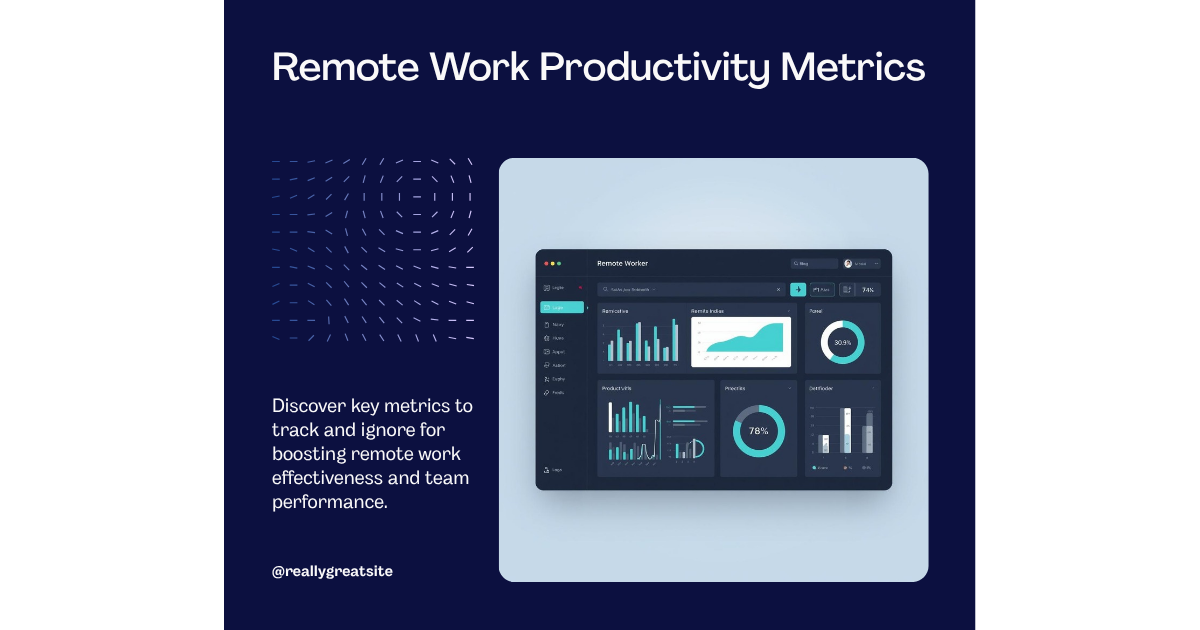
The best productivity dashboards are transparent. The person being measured can see the same data the manager sees. They can explain context. They can flag issues early.
This sounds obvious, but it’s rare. Most companies implement tracking software as a hidden layer. People don’t know what’s being measured. Managers collect data to identify problems. The first sign an employee has is “you’re not being productive.”
Transparent dashboards work differently. A team’s sprint velocity is displayed in real time. Everyone can see who’s blocked and why. A project timeline shows risks early. When metrics change, the person affected notices first and can explain what’s happening.
The manager’s job becomes coaching, not policing. “I notice your output is lower this week. What’s going on? What can I do to help?” This conversation happens because data is shared, not because surveillance detected you looked busy for fewer minutes.
This requires training managers on how to use dashboards appropriately. A dashboard is a conversation starter, not a judgment tool. It surfaces patterns that need discussion. It helps identify resource constraints. It shows where someone needs support. Used this way, dashboards improve productivity. Used as surveillance tools, they tank morale.
Know the Difference Between Red Flags and Noise
Every person’s productivity varies. One week they’re in deep focus on a hard problem. The next week they’re in lots of meetings. Some days they’re solving problems solo. Other days they’re mentoring juniors. Random variation is normal and it’s not a signal.
Red flags are different. A sustained drop in output over weeks. A consistent pattern change tied to a specific event. A person who was reliable and suddenly isn’t. A team that was shipping features and now they’re not.
The distinction matters because it changes how you respond. A one-week productivity dip doesn’t require action. It might require understanding, but not intervention. A person’s output drops 30% for four weeks straight, that’s worth investigating. “What’s changed? What do you need from me? Are you burned out? Is something blocking you?”
Red flags are also contextual. When someone transitions into a new role, lower output in their first month is expected. That’s not a red flag. It’s normal. A red flag would be if they’re not improving after three months. When a team is in heavy project phase, time spent in meetings goes up and deep work time goes down. That’s expected. The flag would be if the project shipped late.
Many managers mistake noise for red flags. They see one low week and assume the person is disengaged. They see time off the clock and assume the person is lazy. This leads to micro-management and it drives away good people.
The inverse mistake is ignoring real red flags. A team consistently missing deadlines. A person whose quality is degrading. Turnover that’s climbing in a specific department. These deserve investigation and action.
Transparency About Metrics Matters More Than Accuracy
You can’t measure output perfectly. Some work is invisible. Context switching costs are hard to quantify. Quality is subjective. The goal isn’t perfect accuracy. The goal is a shared understanding of how work is assessed.
Your team should know exactly how productivity is measured. What counts as output. What counts as quality. How trade-offs are made. If a developer spends time mentoring someone, does that count against their shipped feature count? Yes. And that’s valued. If someone spends time on technical debt, how is that reflected? You decide. But you decide explicitly and you communicate it.
This prevents the suspicion that comes with hidden metrics. It also prevents gaming. When people know how they’re assessed, they improve for the right things. When it’s hidden, they improve for what they think you’re measuring. These are often misaligned.
Document your productivity framework. Here’s what we measure. Here’s why we measure it. Here’s how it ties to compensation and feedback. Here’s how context changes our interpretation. Distribute this to the whole team. Transparency builds trust even if your metrics are imperfect.
Use Tools to Enable Transparency, Not Hide Data
There are hundreds of productivity tools. Most fall into two categories. Tools that track activity (Hubstaff, Time Doctor, ActivTrak). Tools that track output (Asana, Jira, Monday.com, Linear).
The second category is what you want. Project management tools that show what’s being worked on. Version control systems that show shipping history. Customer feedback systems that show impact. These tools generate productivity metrics as a byproduct of normal work, not through surveillance.
The first category is tempting because it feels scientific. It generates data. It looks actionable. But it’s measuring the wrong thing. The data feels accurate because it’s quantifiable, but the metric itself is useless.
Your tech stack matters less than whether it’s transparent. Basecamp and Asana can generate the same productivity findings as specialized tracking software. The difference is cultural. One approach treats productivity as something that happens in tools you use. The other treats it as something you monitor separately from work.
The best setup is tools that make work visible by default. Your team updates status in Linear. That visibility shows productivity. Someone sees a person is blocked. That creates a support conversation. Output metrics emerge without surveillance.
Productivity Conversations Happen Regularly, Not Just in Crisis
If the only time you discuss productivity is when something’s wrong, you’ve lost trust. Your team assumes you’re dissatisfied. They get defensive. The conversation becomes adversarial instead of supportive.
Build productivity discussions into regular 1-on-1s. “How are you feeling about your output this week? What’s in the way? What’s going well?” These regular conversations surface problems early. They build context. They give you early warning when someone’s struggling.
Review metrics together. “Your shipped features are tracking well. I notice you had more meetings this week than usual. Is the project phase shifting?” These conversations normalize discussing productivity. They make metrics a tool for support, not a club for punishment.
When something is genuinely wrong, the conversation is easier because you’ve been having these discussions all along. “Your output has dropped about 30% over the last month. I’ve noticed this starting around when you moved to the new team. Is that correlated? What would help?”
The conversation-first approach also catches things that metrics miss. Maybe someone’s output is fine but they’re burned out. Maybe they’re in a role that doesn’t suit them. Maybe they’re looking for growth in a direction you can’t provide. Metrics alone don’t surface these. Regular conversations do.
Trust-Based Frameworks Actually Work Better
The highest-performing remote teams use frameworks that assume competence and autonomy. Goals are set collaboratively. Progress is tracked transparently. Feedback happens regularly. Trust is the baseline assumption.
This framework has guardrails. Goals have clear definitions of success. Performance issues are addressed directly. Under-performers don’t stay indefinitely out of misplaced trust. But the starting point is trust, not surveillance.
Companies that switched from activity tracking to trust-based frameworks report. Productivity actually increased. People worked more intentionally because they owned outcomes. Retention improved because the culture shifted from distrust to partnership. Manager workload decreased because they spent less time policing and more time coaching.
The framework requires good hiring and management training. You need people capable of autonomous work. Managers need to be coaches, not controllers. But these are investments worth making.
The alternative, activity tracking and micromanagement, creates a self-fulfilling prophecy. You hire good people and treat them like they can’t be trusted. The good people leave. You’re left with people who don’t know how to work autonomously. So you need more tracking. It spirals.
Measure Long-Term Productivity, Not Daily Output
Productivity isn’t linear. Some weeks are heavy output. Other weeks are planning, learning, strategic work that doesn’t show up in shipped features. Good managers know this.
Measure productivity over quarters and years, not days and weeks. Did the team ship more features this year? Did quality improve? Did the tech debt get managed? Did people grow into new skills? These are the productivity metrics that matter.
Daily productivity variation is noise. It’s unavoidable. Some people are morning people. Some are night owls. Some people work in long focus blocks and some work in short bursts. Some people batch their meetings and some sprinkle them throughout the day. These differences are fine.
The metric that matters is whether people are consistently delivering on commitments over meaningful time periods. A month, a quarter, a year. This filters out the noise and surfaces real patterns.
It also respects the reality of knowledge work. Sometimes the most productive days look empty on a time tracker because you’re thinking. Sometimes the highest-output days involve a lot of context-switching and meetings because that’s what the work required.
People Analytics for Distributed Teams
Building Remote Work Culture
Workforce Management Guide
Gallup: Remote Work Effectiveness Research
HBR: Knowledge Workers More Productive from Home
BLS: Telework Data
Build a Productivity Framework That Actually Fits Your Team
The best productivity approach for a small startup is different than for an enterprise team. The right metrics for a support team look different than for an engineering team. Copy-pasting someone else’s framework doesn’t work.
Start with clarity about what your team is responsible for. What wins matter? What outputs matter? How do you measure quality? Then design metrics around those. Then train managers on how to use metrics for support, not control.
Expect it to evolve. The metrics that worked when you were 20 people might not work at 200. The metrics that work in building might not work in maintaining. Check in quarterly. Are these metrics still useful? Are they creating perverse incentives? Are they missing something important?
The team should help design the framework. What feels fair to measure? What creates the right incentives? What gets in the way of good work? People are much more likely to embrace a productivity framework they helped create than one imposed on them.
Frequently Asked Questions
FAQ: Remote Work Productivity Metrics
What if someone looks unproductive but they’re actually thinking and planning?
This is exactly why activity metrics fail. Deep thinking doesn’t show up as activity. It’s why you need outcome-based metrics. Define success as project completed, goals met, quality delivered. If someone completes projects and hits their goals, they’re productive. How they spend their time getting there is less important than the results. This is why trust-based frameworks work better than activity tracking.
How do we measure productivity for roles like customer support or management where output is less tangible?
For support, measure customer satisfaction, ticket resolution time, and quality of solutions. For management, measure team goals met, quality of decisions, hiring effectiveness, and retention. For strategic roles, measure progress on key initiatives and quality of thinking. The pattern is the same. Define what success looks like, then measure whether it’s happening. It’s harder than keystroke tracking, but it’s the only approach that actually works.
What if our industry or client requires time tracking for billing?
Time tracking for billing is different from time tracking for productivity. You can have both. Require time tracking for billing purposes. But don’t use that same data to measure employee productivity. Use outcome metrics instead. A developer might log 40 hours on billable time but ship different amounts of work depending on the project complexity. Measure what they delivered, not the hours they logged.
How do we spot when someone is genuinely underperforming versus having a rough week?
Look for sustained patterns over weeks or months, not single weeks. Correlate performance changes with specific events (role change, project phase, personal circumstances if they shared). Have regular conversations about what’s going on. A person with one low week isn’t underperforming. A person trending down for six weeks is. The difference is obvious if you’re paying attention to patterns instead of daily fluctuation.