Quote only. Asset Panda’s pricing page carried no currency figures at all when it was read on 28 October 2026, which means there’s nothing here to multiply by your asset count and no ladder to compare against. That’s common in this category, and it changes what a useful article can offer you.
TL;DR
- Asset Panda publishes no rate card, so every evaluation starts with a conversation.
- Pricing in this category is usually driven by asset count rather than by user count.
- Its flexibility is the selling point and the thing that makes a quote variable.
- Decide your asset scope before you call, because scope is what moves the number.
- Two comparable tools publish ladders, which gives you a reference for the shape of the market.
- Nothing in this category ships or collects hardware, so check which problem you’re solving.
What is on the pricing page
Read on 28 October 2026 with scripts and styles stripped out first, because minified code reads like currency to a scraper and that error has produced published prices for vendors who never had any.
The result was clean and unambiguous: zero currency figures across the whole page. No tier numbers, no per-asset rate, no starting price. What you get is a description of the product and a route to a conversation, which is a perfectly normal way to sell configurable software.
So any article offering you a confident per-asset figure is estimating, however precise the number looks. Ask where it came from before you use it.
Why this one is genuinely hard to publish
There’s a real reason behind the silence here, and understanding it helps you shape the conversation.
The distinguishing feature isn’t an IT one. This product isn’t limited to IT at all. It tracks whatever you configure it to track, which means tools, vehicles, equipment and fixed assets as readily as laptops, and companies use it across departments that have nothing to do with technology. A product whose scope is defined by the customer is genuinely difficult to price on a page. Because two buyers with the same headcount can have asset counts that differ by an order of magnitude.
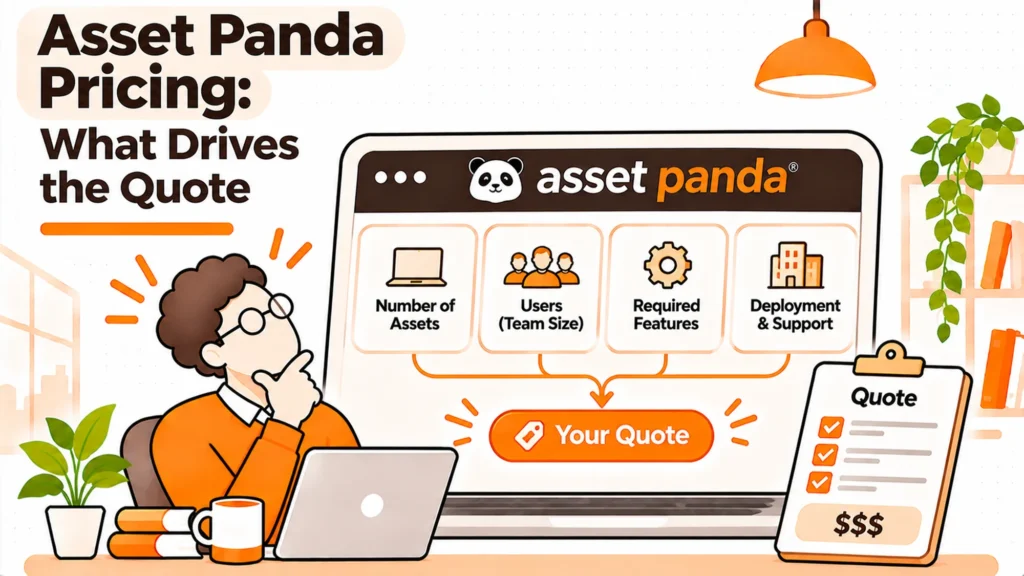
That flexibility is the thing worth paying for if you need it. It’s also the reason your quote depends more on decisions you make than on anything the vendor controls, which puts an unusual amount of the pricing power in your hands if you turn up prepared.
The three decisions that move the number
Make these three before you make contact. Each one is yours to decide and each one changes the quote materially.
Asset scope. What goes in the system. The instinct is to track everything, and the instinct is wrong, because every additional category multiplies record count without adding decision value and a system holding four thousand keyboards is a system nobody keeps current. Start with what’s expensive, mobile or carries data, which usually means computers and phones.
Configuration depth. How many custom fields, workflows and integrations you actually need. Configurable products invite elaborate setups during a trial, and the elaborate setup then needs somebody to maintain it, and a narrow configuration is cheaper to buy and far more likely to be accurate in month seven.
Who uses it. A system used by two people in IT is a different proposition from one used by forty managers across five departments. Work out who genuinely needs access, because that number tends to drift upward during an evaluation and it’s easier to add seats later than to remove them.
What to do:
- Write the asset scope down as a list of categories, and keep it short.
- Count the assets in those categories, including anything in storage.
- Name the integrations you need rather than asking what’s available.
- Count the people who need access, honestly.
- Ask for the figure in writing with the renewal basis attached.
Using the published tools as a reference
You can’t price this product from a competitor. You can learn what unit the market uses, which is worth knowing before anybody quotes you anything.
ManageEngine AssetExplorer prices by asset count, starting at $115 a month for 250 IT assets on its cloud edition and rising in bands. That’s the clearest published example of the asset-count model in this category, and it tells you what question a quoted vendor is likely to ask you first.
Snipe-IT marks the floor for a narrower requirement. Its self-hosted edition is free and open source, with hosted tiers from $399.99 per year. If all you need is serial numbers, assignees and a check-out history, that comparison is worth running before you buy anything configurable, because configurability you don’t use is the most common form of overspend here.
What no asset platform does
Two gaps are worth naming because buyers routinely expect one or both to be covered.
The first is discovery. A register holds what somebody put in it, so it’s accurate about everything it contains and silent about everything else, and that silence builds confidence without building coverage. If your real problem is hardware you’ve lost track of, you need something that scans rather than something that records.
The second is the physical work. No asset platform buys a laptop, ships it to a home address, stores it between users or collects it from somebody who left last month. That market publishes even less than this one does: Workwize publishes no rate card, Firstbase publishes nothing and allwhere is consultation-only. RemoAsset publishes $1,499 a year for its Subscription tier, with procurement and retrieval stated across 80+ countries. Disclosure: RemoAsset is our own product, and the limits belong next to the figure. It does no network discovery, it does no software licence management, and only the Subscription tier publishes a figure because the pay-as-you-go side is quoted.
Checklist before the first call
Checklist:
- Asset categories, written as a short list.
- Asset count within those categories.
- Integrations needed, named individually.
- Number of people who need access.
- Whether you need discovery as well as a register.
- Four weeks in the timeline, since this is a quoted sales cycle.
Final thoughts
Not publishing a price isn’t evidence of anything except a variable cost structure and an enterprise sales motion. For a product whose scope the customer defines, a single page figure would mislead more buyers than it helped.
It does mean one thing. The quality of your quote depends on the quality of your brief. Turn up with a scope list, an asset count and a named set of integrations, and you’ll get a number you can plan against. Turn up asking what it costs and you’ll get a discovery call followed by a figure built on assumptions you didn’t make.
Frequently asked questions
How much does Asset Panda cost?
There’s no published figure to quote. When the pricing page was read on 28 October 2026 it carried zero currency figures, offering a product description and a route to a conversation instead. Pricing in this category is usually driven by asset count, so your own count and your scope decisions are what determine the quote you get.
Why does it not publish pricing?
Scope, most likely. The product’s scope is defined by the customer rather than by the vendor. It tracks whatever you configure it to track, including equipment that has nothing to do with IT, so two companies with identical headcounts can have asset counts an order of magnitude apart. A single page figure would be wrong for most readers, which is a reasonable argument for leaving it off.
What should I decide before asking for a quote?
Three things, and all three are yours rather than the vendor’s. First, your asset scope, which means deciding which categories of thing go into the system at all and which stay out of it. Your configuration depth, meaning how many custom fields and workflows you genuinely need. And how many people need access, counted honestly rather than optimistically, since that figure tends to drift upward during an evaluation.
Which asset tools publish a ladder?
A couple, and they’re useful as reference points. ManageEngine AssetExplorer publishes by asset count, starting at $115 a month for 250 IT assets on its cloud edition. Snipe-IT publishes a free self-hosted edition with hosted tiers from $399.99 per year, which marks the floor if your requirement is only a register with assignees and a history.
Does an asset register find devices we have lost?
No. A register is accurate about what somebody entered into it and silent about everything else, which can build false confidence rather than coverage. Finding hardware nobody recorded needs a discovery tool that scans networks and cloud accounts, and that’s a different product category with different strengths and a different blind spot.
Can it handle shipping and retrieval?
It can’t, and nor can any asset platform. They hold records rather than hardware, so buying a laptop, getting it to somebody’s home abroad, storing it between users and collecting it from a leaver all sit outside the category. For a distributed fleet that half needs a logistics supplier, and most of those publish no rate card at all.