Jamf manages Apple devices extremely well and has no involvement in getting them to people. For a distributed team that second half is often the part that’s actually broken, and no tier of a management product will fix it.
TL;DR
- Jamf is Apple device management. Procurement, shipping and retrieval are not part of it.
- Its pricing page showed no currency figures at all when read on 26 October 2026.
- Jamf for Mac and Jamf for Mobile are bundles of several products, not standalone Jamf Pro.
- Jamf Now is limited to organisations with fewer than 25 employees, which is a headcount rule rather than a device minimum.
- Most teams searching here need to add a logistics platform rather than replace Jamf.
- Apple Business, which replaced Apple Business Manager in April 2026, now includes management at no cost and changes the small-fleet calculation.
Jamf’s pricing is harder to pin down than it looks
Check it yourself before trusting any article, including this one. Here’s why.
Read it on 26 October 2026. The pricing page carried no currency figures at all. Jamf for Mac and Jamf for Mobile both showed contact options, Jamf Now showed a sign-up link, and no billing basis or minimum was stated anywhere. Earlier in October the same page did publish list figures, so this has moved recently and may move again.
That matters because comparison articles are full of Jamf prices that were accurate when written. A figure you find in a blog from three weeks ago may simply no longer be on the vendor’s page, and quoting it into a budget is how a procurement conversation goes wrong.
There’s a second trap. Jamf for Mac and Jamf for Mobile are described as powered by several underlying products rather than being standalone offerings, so any figure attached to one of them is a bundle price and not the price of Jamf Pro on its own.
What Jamf does and doesn’t cover
It’s a management product. Enrolment, configuration, policy, security and the surrounding tooling for Apple estates.
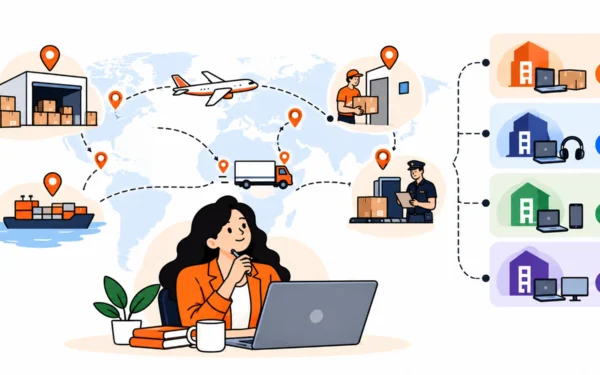
What it doesn’t do is buy a laptop, get it into somebody’s hands in another country, or retrieve it when they leave. That’s warehouses and courier contracts and customs paperwork, which is a different business entirely, and plenty of excellent management products quite sensibly stay out of it.
So the useful first step is deciding which half you’re actually shopping for, because the two have almost no vendor overlap.
What to do:
- State in one sentence whether your gap is managing Apple devices or moving them.
- If managing, compare within that category and leave logistics out.
- If moving, stop evaluating management products entirely.
- Check whether Apple Business now covers what you were about to pay for.
Apple Business changed the small-fleet maths
Worth knowing if your reference material predates this year.
Apple retired Apple Business Manager, Apple Business Essentials and Apple Business Connect on 14 April 2026 and replaced all three with a single free platform called Apple Business, available in more than 200 countries. It carries built-in management at no cost, which means the point at which a small Apple fleet has to pay for a management platform has moved later than it used to be.
The operational requirements didn’t change. You still need the organisation setup, the domain verification, the identity decision, and devices bought through Apple or an enrolled reseller to appear in automated enrolment. Only the product name and the price floor moved.
For a team of two dozen people on Macs, that’s worth checking before paying for anything.
If the gap is management
Then the comparison stays inside that category, and a few options are worth knowing.
Electric AI publishes a ladder, which almost nobody here does: a free tier, Essentials at $10 per user per month and Pro at $25, with MDM arriving at Pro. The unit is per user rather than per device, which flatters most estates since device counts usually exceed headcount.
NinjaOne publishes a range by volume, roughly $3.75 per endpoint per month at 50 or fewer endpoints down to $1.50 at 10,000. Read the endpoint count with the figure, because the low number is only true at the top of that range.
Rippling IT and Deel IT both fold management into broader suites and both publish nothing for it. Rippling states more than 130 countries for inventory and shipping; Deel’s page states both 130+ and 150+ without explaining the difference.
A team that bought the wrong half twice
An 85-person design studio ran Jamf and had 11 machines unaccounted for across four countries.
They upgraded first. The reasoning was that better management would surface the missing devices. It didn’t, because a management platform knows about machines that check in and the missing ones had stopped checking in months earlier, which is precisely what made them missing. The second move was to evaluate a different management product, which failed for the same reason.
What eventually worked was a logistics platform plus asking people directly. Eight came back, three never did, and the register has been accurate since.
The logistics half
Different vendors, and a quieter market. Workwize, Firstbase, GroWrk, allwhere and Esevel all buy, ship, store and retrieve, and not one publishes a rate card.
RemoAsset is our own product. Procurement and retrieval across 80+ countries with each device tracked from issue through return, from $1,499 a year on the Subscription tier for companies with 50 to 5,000+ employees, including a 60 per cent reduction on retrieval charges.
Three limits worth being plain about. It has no network discovery, so like Jamf it won’t find a machine that stopped reporting. It has no software licence management, so the whole software side of your estate sits elsewhere. And only the Subscription tier publishes a figure, with pay-as-you-go quoted.
It does no MDM, no policy enforcement and nothing Apple-specific, so it replaces none of what Jamf does for you. The two sit side by side.
Checklist
Checklist:
- Jamf’s current pricing read from Jamf’s own page, today, not from an article.
- A one-sentence statement of whether you need management or logistics.
- A check on whether Apple Business already covers your fleet at no cost.
- Any bundle figure identified as a bundle rather than a standalone product price.
- Per-user and per-endpoint quotes converted to one basis before comparing.
- Your real country list if anything physical has to move.
Final Thoughts
Jamf isn’t failing you if laptops aren’t reaching people. It was never the thing that moves them, and upgrading a management tier to solve a logistics problem is an expensive way to learn that.
Work out which half is broken, check whether Apple’s free platform now covers your management needs, and read Jamf’s own page for its current pricing rather than trusting any comparison article. That last point includes this one, and it matters more here than almost anywhere else because the figures have moved twice this month.
Frequently asked questions
How much does Jamf cost?
No figures at all. When its pricing page was read on 26 October 2026 it carried none, with contact options for Jamf for Mac and Jamf for Mobile. Earlier in the same month the page did publish list figures, so this has changed recently and may change again. Read Jamf’s own page rather than any article, including this one.
Is Jamf for Mac the same as Jamf Pro?
No. This is a common source of wrong comparisons. Jamf for Mac and Jamf for Mobile are described as powered by several underlying products, which makes them bundles rather than standalone offerings. Any figure attached to one of them is a bundle price, so presenting it as the cost of Jamf Pro alone is misleading.
Does Jamf ship or retrieve devices?
No. It covers enrolment, configuration, policy and security for Apple estates, which is a management product rather than a logistics one. Getting a laptop to somebody abroad and recovering it afterwards involves warehouses, couriers and customs, and no tier of a management platform addresses any of that.
Can Apple Business replace a paid management platform?
For a small Apple fleet, increasingly yes. Apple Business replaced Apple Business Manager, Apple Business Essentials and Apple Business Connect on 14 April 2026 and includes built-in management at no cost in more than 200 countries. The organisation setup, domain verification and enrolled-reseller purchasing requirements are unchanged, so it is a price change rather than a process change.
Why didn’t upgrading our management tier find our missing laptops?
Because management platforms know about devices that check in, and a missing machine has usually stopped checking in, which is what makes it missing. No tier upgrade changes that. Finding them is a matter of asking people directly and recording what comes back, and preventing the next batch is a logistics and process question.
What covers the logistics half?
Workwize, Firstbase, GroWrk, allwhere and Esevel all buy, ship, store and retrieve, and none publishes a rate card. RemoAsset publishes a Subscription figure. None of them does MDM or anything Apple-specific at all, so whichever one you pick will sit alongside Jamf rather than replacing any part of it.