Germany is one of the easier European markets to get a laptop into, which lulls people into treating it as a shipping question. It isn’t. The constraint is the same as everywhere else: somebody has to be the importer, and a company with no German presence usually can’t be.
TL;DR
- The first question is who acts as importer of record, not which courier is fastest.
- A company with no German entity generally cannot import in its own name.
- Shipping to the employee personally makes them the importer, which is unfair and sometimes costly for them.
- Buying inside Germany through a local provider removes the import question entirely.
- Works councils may have a view on device policy, which is a separate conversation from logistics.
- Duty, VAT treatment and documentation change. Get current figures from somebody accountable.
Why this isn’t a courier question
Carriers will quote you a short transit time into Germany and the quote will be honest. It still isn’t the thing that decides your timeline.
Commercial goods entering any country need a named party responsible for the import declaration, for any duty and tax owed, and for the documentation being correct. That role carries obligations. It isn’t a box you tick on a waybill, and a company with no legal presence in the country typically can’t take it on in its own name.
So the real question becomes who does, and the honest list of candidates is short.
The four routes
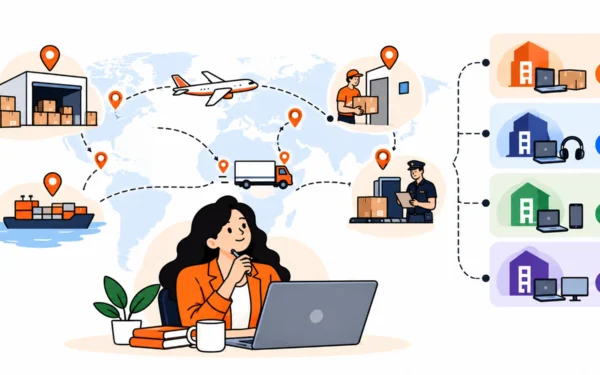
Buy inside Germany. A provider with a local presence purchases domestically and delivers domestically. No import, no clearance, no duty question, and for a company without an entity this is usually the right answer by a wide margin.
Use your own entity. Clean and available only if you have one. If you do, your finance team already knows the process rather better than any article will, and this one isn’t really written for you.
Importer of record service. A third party takes the role on your behalf. It works, it costs money, and it keeps the asset in the company’s name rather than landing it on a new employee’s doorstep.
Ship to the individual. Avoid it. You’re asking somebody in their first fortnight with you to receive, declare and possibly pay for a commercial asset they don’t own.
What local purchase gets you
Speed, first. A domestic delivery lands on a date you can promise a new starter without hedging.
Then warranty and service. Hardware bought in-country carries support you can actually use when a screen fails in month five, and a machine with an international warranty that no local service centre will honour is one you end up replacing rather than repairing.
And the small daily things. A German keyboard layout, the right plug on the charger, a power supply that fits the socket on the wall without an adaptor. None of it is dramatic and all of it is noticed every working day by the person using the machine.
What to do:
- Ask each vendor whether they buy in Germany or ship into it.
- If they import, get the named importer of record in writing.
- Ask for door-to-door timing including clearance, not transit time.
- Confirm the keyboard layout and warranty are German rather than assumed.
The thing that’s specific to Germany
Logistics here are comparatively straightforward. What’s different is that your device decisions may touch employee representation.
Where a works council exists, changes affecting employees can require involvement, and that includes some things IT teams think of as purely technical. A device management rollout is the obvious example, because the platform doing the management often carries capability that observes activity, and that’s a different category of change from buying a laptop.
What triggers involvement, when, and with what effect differs by jurisdiction and by the specific body, so it needs local advice every time rather than a policy written centrally. The practical point for logistics is narrow: shipping a machine is rarely the issue, and what you configure on it may be.
Raise it early if it applies to you. Consultation before procurement is a much easier conversation than consultation after deployment.
What this article won’t tell you
No duty rates. No VAT percentages. And no clearance times in days, because any figure printed here would be out of date long before you got round to acting on it.
Those vary by classification and by the specifics of a shipment, and the rules change, so a number published here would carry an authority it hasn’t earned and would be stale before most people read it. Anybody giving you a figure you could plan against should be a customs broker, a forwarder with German operations, or your own advisers, and it should be current rather than general.
The structure is what travels between articles. Somebody must be able to import, a foreign company usually can’t, local purchase removes the question, and the numbers belong to somebody accountable for being right about them.
A company that got the way in right
A 137-person company hired 4 engineers in Berlin and used a provider who bought locally. Machines arrived in under a week.
What they hadn’t planned was the configuration question. Their device management rollout reached the German team two months later and nobody had raised it with anybody, which turned a routine deployment into a pause while the right conversations happened. The hardware had never been the sensitive part and nobody had thought to separate the two decisions.
Shipping and configuring are different questions. Treating them as one is how a simple market becomes complicated.
Where a platform helps
RemoAsset is our own product. The relevant capability is procurement and retrieval across 80+ countries, which means buying in-country where that’s the sensible route, with each device tracked from issue through return. From $1,499 a year on the Subscription tier for companies with 50 to 5,000+ employees, including a 60 per cent reduction on retrieval charges.
Three limits. It has no network discovery, so it covers devices it handled rather than everything your people hold. It has no software licence management, and it does no device management at all, which is the part that may need consultation. And only the Subscription tier publishes a figure, with pay-as-you-go quoted.
Workwize, Firstbase, GroWrk, allwhere, Esevel and Deel IT work the same ground and publish no rate card. Rippling IT states more than 130 countries and publishes no price either.
Checklist
Checklist:
- Buy locally or import, decided before the hire starts.
- A named importer of record if anything crosses a border.
- Written confirmation that no charge lands on the employee.
- German keyboard layout and locally serviceable warranty confirmed.
- A separate decision on device configuration, raised early if representation applies.
- A retrieval plan agreed at the same time as the delivery plan.
Final Thoughts
Germany is a straightforward market to equip somebody in, as long as you treat it as an importer question rather than a courier one and buy locally when you have no entity there.
The part that catches teams out is further downstream. What you put on the machine can need a conversation that moving the machine never did, and raising that before procurement rather than after deployment is the difference between a short discussion and a stalled rollout.
Frequently asked questions
Can a foreign company ship a laptop to an employee in Germany?
Physically yes. Practically it turns on who can act as importer of record. Commercial goods need a named party responsible for the declaration, duty and documentation, and a company with no German presence generally can’t take that role in its own name. Shipping to the individual instead makes your new employee the importer, which is both unfair and potentially expensive for them.
Is buying locally in Germany better than importing?
For a company without a German entity, almost always. It removes the import question, delivers on a date you can promise, and gives you warranty that a local service centre will honour. You also get the German keyboard layout and the right power plug, which sound trivial and are noticed every single working day.
What import duty applies to a laptop into Germany?
This article deliberately gives no figure. Rates and treatment vary by classification and by the specifics of a shipment, and the rules change, so a number printed here would read as authoritative while being unreliable. Ask a customs broker, a forwarder with German operations, or your own advisers for something current.
Do works councils affect equipment decisions?
They can. The distinction worth drawing is between moving a device and configuring it. Shipping a laptop is rarely the sensitive part; enrolling it in a platform that carries activity-monitoring capability is a different category of change. What triggers involvement and with what effect varies by jurisdiction and by the body, so take local advice and raise it before procurement.
How long does delivery actually take?
A domestic purchase and delivery typically runs in days. That is a timeline you can commit to. An import runs at the speed of clearance, which is predictable on a good day and not on others. Ask every vendor for door-to-door timing that includes clearance rather than a carrier transit time, because those two numbers can differ substantially.
What about getting the device back?
Plan it at the same time as delivery rather than afterwards. If the machine was bought locally it can usually be collected locally and redeployed to the next hire in Germany, which is frequently cheaper than any other option and is the one teams most often fail to consider. Confirm retrieval is in scope before signing anything.