Firstbase sells equipment as a subscription rather than a purchase. That single decision shapes everything else about it, and it is also the clearest reason to look elsewhere. If you want to own the fleet at the end, you are comparing two different products rather than two prices.
TL;DR
- Firstbase bundles the lifecycle into a recurring per-person cost. More is included by default, and you hold no asset at the end.
- The alternatives split on one question: do you want to own the hardware or rent it. Everything else is secondary.
- Subscription suits unpredictable headcount and short tenures. Ownership suits stable teams keeping machines four years.
- Nobody publishes a price. Six vendors checked on their own pricing pages on 14 October 2026, none shows a figure.
- Run the four-year arithmetic with your own residual-value assumption before deciding. It is the only number that settles this.
- If your fleet churns between holders, warehousing matters more than the pricing model does.
What the subscription model actually buys you
The honest case for Firstbase is not that it is cheaper. It is that more of the lifecycle sits with the vendor by default, which matters enormously if nobody internally owns this work.
Retrieval is in scope rather than a module. In platforms that price retrieval separately, a high leaver rate turns into a series of per-collection invoices nobody modelled. A subscription absorbs that.
Replacement is the vendor’s problem. When a machine fails, the question of who claims the warranty and who absorbs the gap has a default answer rather than a negotiation.
And the cost is predictable per person, which makes budgeting straightforward and makes the finance conversation easier than a lumpy capital purchase followed by unpredictable service charges.
Where it stops making sense
| Situation | Why an alternative fits better |
| Stable team, machines kept four years | Rent exceeds purchase over the full term |
| You want an asset on the books | Subscription leaves no residual value |
| Large fleet already owned | Existing hardware does not fit the model |
| Devices churn between holders | Warehousing matters more than the model |
| Unusual country mix | Coverage beats pricing structure |
| Employment already via one provider | A bundle removes a vendor relationship |
The first two rows are the same point from two directions, and together they are the whole decision. A subscription is excellent value when tenure is short and headcount moves. It is poor value when a machine sits with one person for four years and still has resale value at the end.
The alternatives, and who each one suits
Workwize owns warehouse space, which no other vendor here does. That earns its keep on storage, redeployment and replacement speed in the countries where the warehouses sit. If your devices move between holders rather than going out once, this is the strongest alternative. Note the domain is goworkwize.com.
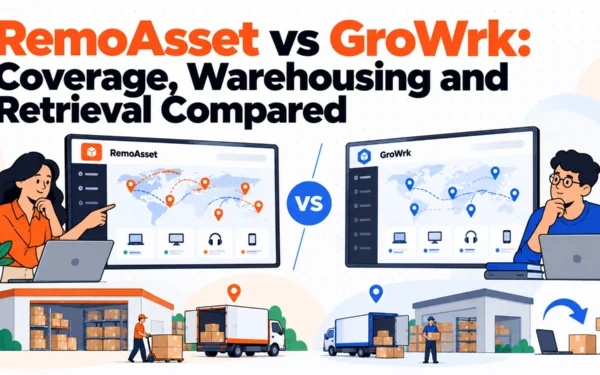
GroWrk covers a wide country list and scopes each arrangement individually. Worth shortlisting when your country mix is the hard part of the problem rather than the pricing model. The consultative approach costs evaluation time.
allwhere runs closest to a managed service. If the real gap is that nobody internally owns device logistics, that is a legitimate answer, and it is the same gap Firstbase addresses through a different mechanism. Comparing these two is comparing managed service against bundled subscription.
Deel IT ties hardware to employment. Neat while every person with a device is employed through that provider, and immediately untidy when you hire directly in your home country.
Disclosure: RemoAsset is owned by the same people who publish PeopleOpsHQ. It handles procurement, deployment, tracking and retrieval, enrolling devices into your management system before dispatch, and it is built around ownership rather than subscription. Its limits, stated plainly: it publishes no price and requires a demo, it is markedly weaker for hardware it did not supply, and it is not a device management system. Compared against the rest in our laptop procurement platform comparison.
The arithmetic that settles it
Rent against own is not a matter of taste. It is a sum, and you can run it before talking to anybody.
Checklist:
- Take your real average device tenure from last year, not your policy. Those differ more than people expect.
- Price the machine you actually buy, then subtract a realistic resale value at that tenure.
- Add the services you would buy separately under an ownership model: retrieval, storage, replacement cover.
- Divide both totals by the number of people covered and by the number of years, so you are comparing the same unit.
- Then stress it: run the same sum at double your current turnover, because that is where subscription pulls ahead.
Write down what you expect the answer to be before you ask any vendor for a number. A quote far below your own estimate is usually excluding something rather than being generous, and having a prior makes that visible immediately.
What nobody will tell you from a web page
Every vendor named here was read from its own pricing page on 14 October 2026 and none publishes a currency figure. That means the comparison between subscription and ownership cannot be made from public information, which is frustrating and is also why the arithmetic above matters: it gives you an expected answer to test quotes against.
When you do ask, ask for the subscription quoted per person per year including everything, and the ownership quote as hardware plus named services. Those two shapes can be compared. A monthly figure against a device price cannot.
Final thoughts
Firstbase is a good answer to a specific question: how do we stop device logistics being somebody’s part-time job without hiring anybody. The subscription model puts more of the work on the vendor by default, and for a team with no IT function that is worth real money.
It is the wrong answer for a stable team keeping machines four years, and it is beside the point if your actual problem is country coverage or a fleet that churns between holders. Run the four-year sum with your own tenure figure first. It takes twenty minutes and it decides the shortlist.
Frequently asked questions
What is the main reason to look at Firstbase alternatives?
Ownership. Firstbase provides equipment as an ongoing subscription, so you hold no asset at the end and there is no residual value to recover, which is excellent when tenure is short and headcount moves and poor value when a machine sits with one person for four years. If you want hardware on the books, you are comparing two different products rather than two prices.
Is renting equipment cheaper than buying it?
It depends almost entirely on your real average device tenure and your turnover, which is why this is a sum rather than a preference. Take last year’s actual tenure rather than your policy, price the machine you would buy minus a realistic resale value, add the services you would purchase separately under ownership, then divide both by people and years so the units match.
Which alternative is strongest if devices move between people?
Workwize, because it owns warehouse space and the others do not. A machine returned in one month and reissued three months later has to sit somewhere, and a vendor with warehousing turns that into a service rather than a cupboard in your office, with redeployment avoiding a round trip. Its domain is goworkwize.com.
Do these vendors publish pricing anywhere?
No. All six were checked against their own pricing pages on 14 October 2026 and not one shows a currency figure, because cost depends on country mix, volume and which jobs are included. The practical consequence is that a subscription-versus-ownership comparison cannot be made from public information, so run your own arithmetic first and use it to test the quotes you receive.
How should I ask for quotes so they are comparable?
Ask for the subscription quoted per person per year with everything included, and the ownership option as hardware cost plus named services listed individually. Those two shapes can be put side by side, whereas a monthly per-person figure against a device purchase price cannot, and the mismatch is how teams end up choosing on a number that was never comparable.
Does a subscription model suit a company with no IT team?
It suits it better than most alternatives, because retrieval and replacement are in scope by default rather than priced as modules you have to know to ask for. The comparable option is a managed service such as allwhere, which solves the same ownership gap through a relationship rather than a pricing structure, and choosing between them is really a choice about how you want to be supported.